Environmentally Friendly Design Practices
- Apr 11
- 2 min read
Updated: Jun 4
Sustainability in Modern Graphic Design
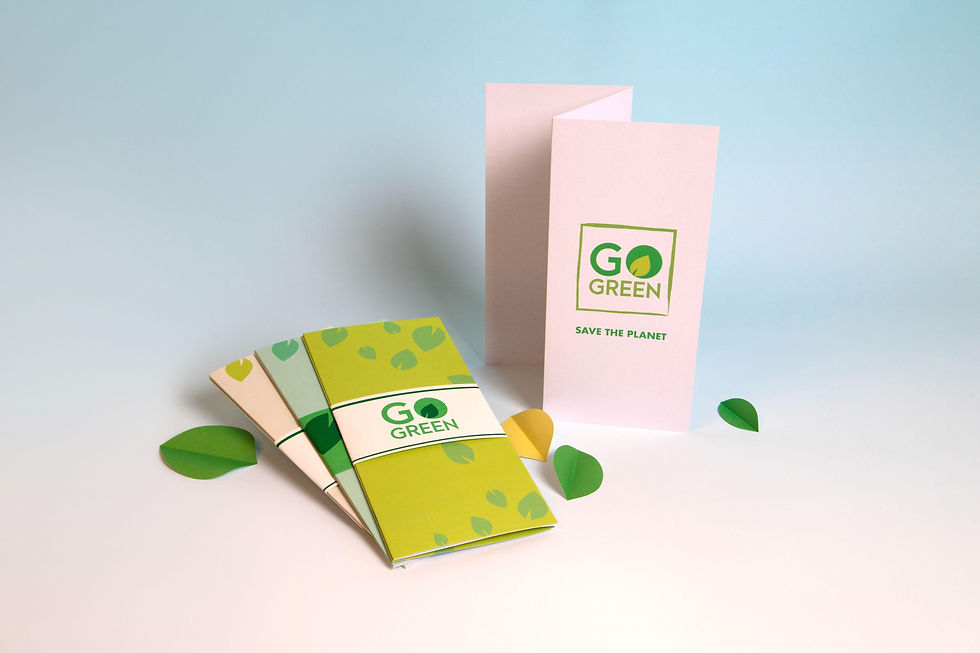
Sustainability has become an increasingly important consideration within graphic design as both consumers and businesses become more environmentally conscious. Designers are now expected to think beyond aesthetics and consider how materials, production methods, and digital processes impact the environment. This has led to the growth of environmentally friendly design practices across print, packaging, branding, and web design.
One of the most common sustainable practices within print design is the use of FSC-certified paper stocks. The Forest Stewardship Council (FSC) ensures that paper products are sourced from responsibly managed forests, helping to reduce environmental damage and deforestation. Designers may also reduce environmental impact through careful layout planning, minimising ink usage, reducing unnecessary print finishes, and selecting recyclable packaging materials.
In an era when consumers expect packaging to be far more than just a protective shell, designers are reimagining how a box, a bag, or a label can foster connections and spark delight. As a result, one emerging challenge has become particularly urgent: how can we craft packaging that both enriches our sensory experiences and aligns with the critical need for sustainability?
An article by Creative Boom explores that topic in depth and I would encourage anyone interested in sustainable design practices to have a read through it because while sustainable design practice is admirable it also comes with its own challenges such as "limitations in terms of availability, cost, and scalability".
Sustainability within design is not limited to print. Digital design practices also contribute to environmental impact through energy consumption and server usage. Modern UX/UI designers are increasingly discussing concepts such as sustainable web design, where websites are optimised for efficiency through reduced file sizes, streamlined interfaces, and improved performance.
An additional challenge is the issue of greenwashing, where brands exaggerate or falsely communicate their environmental credentials through visual branding and marketing. This places greater responsibility on designers to ensure that sustainability claims are communicated honestly and ethically. As environmental awareness continues to grow, sustainable design is likely to become a core expectation rather than an optional consideration within the creative industries.
Graphic designers can contribute to more sustainable practices by selecting environmentally responsible materials, reducing print waste, creating longer-lasting design systems, prioritising accessibility, and considering the environmental impact of digital products. By making informed decisions throughout the design process, designers can reduce waste while creating effective and responsible communication solutions.


